Posts

End shadows of intolerance post elections

Achmat Hilmi

TheJakartaPost

Jakarta   /   Fri, April 26, 2019   /  09:06 am

The simultaneous elections have ended, but they have left a frenzy and disputes. A group that claims to be the most moderate in the country is no longer able to display the tenderness and progressive spirit of Islam; it is trapped in political barriers and becoming intolerant. Many seem to be fighting for their spirit of primordialism based on political factions, rather than the spirit of nationalism.

During the presidential and legislative campaign period until polling day on April 17, security forces had managed to secure physical space but they never succeeded in reconciling virtual space.

These simultaneous elections have not managed to assert the next president, the votes for whom are still being tallied by the General Elections Commission (KPU). Whoever wins the presidential seat seems to be a vague figure amid truth claims of “quick counts” of pollsters and “internal counts” of the camps of the presidential contenders.

The elections have instead succeeded in blurring the spirit of diversity. The presidential election, in particular, has considerably affected family relations, friendship and national unity. One camp trumps up the threat of communism while the other raises threats of Indonesia turning into a caliphate, each claim intending to sink the electability of the incumbent Joko “Jokowi” Widodo and his challenger Prabowo Subianto.


Social space actually reinforces differences, blurs unity.


Social space actually reinforces differences, blurs unity and increasingly converges to the bipolarization of political space with two extreme camps charging the other of being “infidels”. Political camps thus become increasingly exclusive.

It seems public space today, particularly as echoed in cyberspace, allows less discourse for equality and justice, and instead extends the space for discrimination against those who succumb to the rallying cries of each camp.

Many voices of devotees of tolerance and diversity have become silent, turned off by the dominance of partisanship.

Religious conservativism has merged into political ideological conservativism. Religious fanaticism has reached a universal definition; what it preaches is not a religion that many people understand.

Ideological space is now shifting; from religious ideology; moderate-conservative, transforming into a numerical ideology with symbols and political ideology jargon.

Digital space should contribute to expanding social space that we cannot immediately reach, so we could meet amid differences. But this cannot happen when the other is accused of being an infidel and not having common sense.

Intolerance and exclusivism are being increasingly crystallized to be more extreme than any ideology. There must be a way out.

The epidemic of political extremism must be stopped through the instilling, again, of noble values of tolerance and inclusiveness that depart from our ancestral heritage, progressive understanding of religion and based on the philosophy of the Pancasila.

***

The writer is program and advocacy manager at Rumah Kita Bersama.

Disclaimer: The opinions expressed in this article are those of the author and do not reflect the official stance of The Jakarta Post.

Link:

https://www.thejakartapost.com/academia/2019/04/26/end-shadows-of-intolerance-post-elections.html

Rumah KitaB and the Campaign Against Child Marriage

Kathryn Robinson
Emeritus professor in Anthropology, Australian National Univerisity

Rights in marriage have been a key issue for women’s rights activists all over the world. Age at marriage is perhaps the most significant issue, even more than the free choice of a spouse. Child marriage has been a focus for Indonesian women for nearly a century. In the colonial era, family law was left to the Islamic courts, but the women’s congresses that were held regularly from 1928 argued for secular laws that would protect women’s rights in marriage, including a ban on child marriage and the necessity of a woman’s consent. This emphasis on secular regulation as the way to protect women’s rights bore fruit in the independence period with the passage of the 1974 marriage law which, amongst other things, set a minimum age of marriage, of 16 for females (19 for males) and required that the marriage officiant ensure the woman’s consent.

As education becomes more readily available and more young women are going on to finish high school, and even tertiary education there has been a movement upwards in average age at marriage but as the work of Rumah Kitab shows us, child marriage persists. What are the strategies to address this? The session organized by Rumah KitaB at the Kongres Ulama Perempuan in April 2017 focused on the religious basis of arguments about age at marriage. The kiyai focused on textual analysis of the Qur’an and hadith to show the complexity of the definition of baliq, and the difference between a purely biological concept and a notion of aqil baligh, an idea of adult personhood. This interesting return to religious argumentation was a response to the intervention of MUI in a 2015 constitutional court court judicial review of the marriage law, in particular the regulation of age at marriage. The review had been requested by activists (including Rumah Kitab) on the basis of an argument that Indonesian law should be  harmonized with 2002 Law on Child Protection , which set 18 as the age of adulthood.. The weight given to the MUI submission by the secular court is an interesting cross over between religious and secular courts, which were unified into a single system in Indonesia during the Suharto regime. Rumah KitaB were developing a textually based  argument that could challenge the interpretation offered by MUI, which relied on a single text. Law reform is always an important part of social change. Legal reforms provide venues where people can argue for rights, but also are an important part of raising awareness and changing attitudes. For example, in a case of forced marriage that occurred in the community where I was doing research in the late 1970s, not long after the passage of the marriage law, a local official said to me that if the girl had come to him, he would have stopped the marriage. Talk is cheap’ and he was not put to the test but his comment shows the way in which changes on law begin to circulate and be spoken about, and so potentially impact on people’s behavior. What other ways can child marriage be challenged, and social practices changed? Marriage (and the subsequent state of parenthood) is in most communities the path out of a state of childhood to adulthood. Marriage resulted in the formation of a new conjugal unit and household. For those fortunate enough to pursue schooling, educational success and employment are also ‘building blocks’ of adulthood, and delayed age at marriage has no doubt contributed to the decline of marriages arranged by parents, as young people meet prospective spouses during education and in their work place.

Kathryn Robinson at KUPI

But these opportunities are unevenly spread throughout the archipelago. Especially in eastern Indonesia, schools beyond SD level can be a long way from home. And employment can be even harder to find. In such situations, marriage is the only avenue available young women to achieve adulthood, independence from their families of origin, and they often willingly enter into marriage at a young age . In such contexts, educational and employment opportunities are a critical part of solutions to early marriage. The globalized world we now live in is highly sexualized. Mass media exposes us all to narratives and images that challenge customary forms of morality. I have been shocked at the ready availability, indeed the difficulty of avoiding pornographic content in Indonesia, on social and other forms of media. There is a ‘moral panic’ in Indonesia about ‘pergaulan bebas’. In some research I  conducted few years ago, young people who themselves led innocent lives almost universally identified ‘pergaulan bebas’ as the biggest threat confronting Indonesia’s youth. In addition, prolonged education means many young people live away from home and outside the every day ‘control’ of parents, which can be of concern to parents and children alike. In this context, I understand that recent research by Rumah KitaB has shown that some parents see early marriage as the way to address this perceived risk. But it could also be argued that good sex education on schools and religious institutions, including empowering young people to make informed choices and evaluate risks associated with sexual activity—including health, emotional, social and economic risks— could counter this perceived threat in a more effective way than early marriage. But all of these strands are important legal reform and the empowerment of young women, in terms of their knowledge base but also the practical issues around alternative paths put of childhood. [Kathryn]


Forced marriage law ‘could stop victims reporting crime’

Criminalising forced marriage could stop victims from speaking up if their parents are locked up, campaigners say.

While legislation sends a “strong message,” a charity working with victims said it also scared off others.

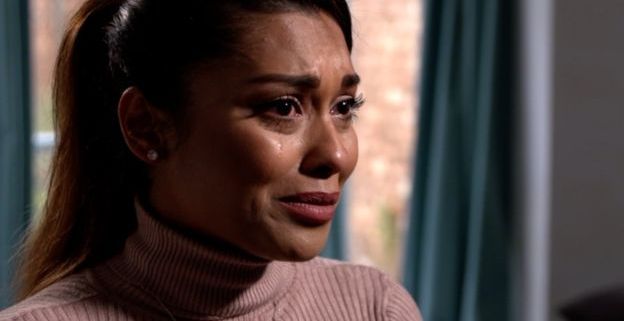
Rubie Marie, 35, who was forced to marry in Bangladesh when she was 15, said: “It is hard because you love your family of course you do… But at the end of the day abuse is abuse.”

The Home Office said it was essential victims had confidence to speak out.

Forced marriage became a criminal offence in 2014, but only one case has been brought in Wales since then – with four convictions in total across the UK.

However, the Welsh Government estimates there are up to 100 cases of forced marriage every year.

Forced marriage victim Rubie Marie

Rubie Marie was raped almost daily by her husband in Bangladesh after being forced to marry him at the age of 15

In 2018, the forced marriage unit – a joint effort between the Foreign and Commonwealth Office and Home Office – gave advice or support in 1,196 UK cases.

Shahien Taj of the Cardiff-based Henna Foundation told BBC Wales Live more prevention work was needed to educate perpetrators, who are often the victims’ parents.

The charity said victims often wanted to return to the family home once the situation was resolved.

“I don’t know a single victim that I’ve worked with that has said she’s ok with the police coming down on parents like a tonne of bricks – all too often they don’t want any intervention because of that,” said Ms Taj.

Ms Marie, who now lives in the Midlands, said once she was married, she was raped “more or less, every single day” so her new husband could have a child and a ticket to live in the UK.

A traffic jam at an intersection in Dhaka, Bangladesh

Rubie Marie was forced to marry a man twice her age after being taken to Bangladesh

The Home Office is consulting on proposals that would legally require those who work closely with young people, such as teachers and social workers, to report suspected cases of forced marriage.

Ms Taj believes forced marriage protection orders are the preferred route – allowing young people to apply to the courts for protection, while keeping the family out of the criminal system.

“We’ve had eight cases where young women have gone home and been able to move on with their lives,” she said.

Samsunear Ali from the charity Bawso said education was key as many parents did not even realise they were breaking the law.

“For them they are doing the right thing and that’s the only way they know how to reduce the level of shame in the family that this child could potentially bring.

“It’s a huge problem in Wales, and it’s still not being talked about as much.”

She said there were cases in rural Wales where women had no support and they were at greater risk, with forced marriages potentially “going on for generations and nobody knows about it”.

Rubie Marie as a young girl

Rubie Marie – pictured here aged five – was told her trip to Bangladesh was a holiday

‘I was raped every day’

Rubie Marie was born and raised in south Wales. She had a happy childhood but everything changed once she hit puberty.

She was taken to Bangladesh in 1998 at the age of 15 under the pretence of it being a holiday.

“We were only supposed to go for six weeks but then it went to two months, then it went to three months, then it got to six months and we all got homesick,” she said.

“I asked my father, I said we want to go home. I want to go back to school. I want my friends. But he would say things like ‘we spent so much money coming here’… That was his excuse, his cover up, his facade to plan what he was planning which was the marriage.

“I was sitting down having dinner with the whole family and he just came in and he sat down and he started to eat and out of the blue, and I remember it like it was yesterday,

“‘Wouldn’t it be great if we got Ruby married?’ And I was mortified. I was a kid and I had a tantrum. I threw my plate on the floor. I started kicking off, banging the doors, ran into my room screaming, shouting. I just didn’t know how to comprehend that information.

“I was put on a bidding system. One of my uncles went and started bidding me. It was horrible. I was treated like a slave.

“I was in this alien country – I didn’t know where to go, where to turn to, didn’t know where there was a phone. Nothing.”

‘I was disowned’

Ms Marie was forced to marry a man twice her age and for her engagement she was “dressed up like a doll”.

“The house was full of laughing people, you know there was people everywhere trying to come into my room to see me, to have a peek at this new bride,” she said.

“And I was just sitting there just thinking ‘I’m just an object’. You just got to do what you’ve got to do and that’s it. My vision was just get home, do whatever you need to do to get home.”

Once she was married, her new husband wanted a child.

“More or less, I’d been raped every single day to get pregnant, so then he’s got an official British pathway of coming to Britain because he’s got a child. That was their plan,” she added.

She got pregnant and came back to Wales to give birth. When the baby was born, she fled: “That brought shame to the family again in their eyes. And I was disowned for a very long time.”

Rubie now works as an ambassador, educating people about forced marriage.

“Now I’m speaking and talking to the world and sharing in that way of there is light at the end of the tunnel, there is a place for you in this world.

“It’s not all doom and gloom. And it’s not hell. You’ve got to turn it around. You’ve got to find that strength to turn it around and use it to your advantage and make it a happy place otherwise no one’s going to do that for you.”

A Home Office spokesman said: “We know that forced marriage is often a hidden crime and so it is essential that victims have the confidence to come forward to get the help they need.

“We are seeking views on whether introducing a mandatory reporting duty might help strengthen protections for victims and ensure more perpetrators are brought to justice.

“The consultation is open to everyone and we are particularly interested in hearing from victims and survivors of forced marriage, and professionals with expertise in the issue of forced marriage.”

Source: https://www.bbc.com/news/uk-wales-46455013

Screening and Discussion of the Film “Memecah Kawin Bocah” by UMN Juice

On November 12, 2018, Rumah KitaB received an invitation from student community of Multimedia Nusantara  University: UMN Journalism Center (UMN Juice) to attend the screening and discussion of the film “Memecah Kawin Bocah”. The film produced by Rumah KitaB in 2016 was one of the selected films played in UMN Juice’s monthly screening film, in addition to the film “Ojek Lusi”, which tells about ojek around the Sidoarjo Mud, which is one of the film produced by UMN students.

The event which was attended by around 25 students was opened with the screening of the film “Memecah Kawin Bocah” and continued with a discussion session by representatives of Rumah KitaB, Fadilla Putri, and Adit from UMN Juice as moderators. Fadilla convey the background of the film. The film is a part of the RK research which lasted for two years. This is a challenge to “simplify” the issue of child marriage that is so complex into the short film.

Fadilla also explains why choosing the issue of child marriage for this movie. Besides as a part of the RK advocacy since 2014, another reason to make this film is that child marriage is still a concern in Indonesia. The child marriage data shows that Indonesia is ranked 7th in the world and 2nd in Southeast Asia. Moreover, with the rise of the fundamentalist movement lately, many have encouraged teenagers and young people to get married early to avoid adultery. In fact, marriage that has not yet reached maturity could have a negative impact on children, especially girls.

Regarding the technique of making films, it can be said that it is not easy. Starting from the selection of informants that have good articulation, making strategic interview questions, and involving child marriages survivor, all of them need extra work to fulfill the principles of protection for children and women. Luckily in the making process, RK was assisted by friends from Communicaption who provided input regarding the storyline and the production process.

The screening of the film “Memecah Kawin Bocah” at UMN is also one of the forms of RK advocacy to a wider audience, moreover the majority of the audience are students. It has to be admitted that the dissemination of this film is still in a limited circle, that is, a group that indeed both understand the dangers of child marriage. By watching and discussing this film with the students, it’s expected that the fellow students have new knowledge related to this dangerous practice. [Dilla]

ITACI UNITES THE YOUTH OF CILINCING IN A CHILD MARRIAGE PREVENTION EFFORT

Andriantono or Andre is one of BERDAYA Program for Youth’s beneficiaries in Cilincing who was successful in incorporating the issue into a lenong performance. Drawn to lenong since a young age, Andre views that the child marriage prevention materials he received are perfect to be used in a lenong performance.

Andre first acted in 2010. He recalled that back then, his friends in RW 6 Kalibaru, Cilincing, North Jakarta, were surprised by his choice to work on lenong, which was considered an outdated performance.

Andre, who was still in high school back then, fell in love with traditional performances. Outside of school, he liked to join events held by many civil society organizations such as World Vision which held a performance in the area a few years ago as a part of its Children’s Day Celebration and Children’s Rights Campaign. Since then, Andre could not take his eyes off art performances, including lenong.

His passion for acting continues even now when he works full time as a security guard in Tanjung Priok Port in Cilincing. He routinely trains ten young children who are a part of the Cilincing Theatre Association (Ikatan Teater Cilincing-ITACI). He partners with Jumadi, a tent officer who was drawn to theatre because of his love for music, to train members of ITACI.

However, it is not easy to attract children in RW 6 to join art activities. “Most of them have lost their interest in art as they are more attracted to hanging out with friends, playing with their cell phones, and joining football gangs,” explained Andre.

Agreeing with Andre, Jumadi views that the adolescents in the area are in need of a more positive activity. “During the previous Ramadhan, many of them joined the suhoor parade, but in the end, they all ended up in brawls,” he added.

Irresponsible adolescent behaviour leading to child marriage is also a common phenomenon for Andre, Jumadi, and the residents of Kalibaru. Poverty and reluctance among the adolescents to talk to their parents motivates them to spend most of their time with their peers, and they often go unsupervised. The emergence of social media has also impacted the way they interact with others. “Some of my friends who got married young did not marry people from this area. Many of them met their partners who are from areas outside of Kalibaru through Facebook and chatting apps,” explained Andre.

The 2013 data of the National Socioeconomic Survey (Susenas) analysed by Statistics Indonesia reveal that 5.6% of girls in DKI Jakarta were married under the age of 15, 20.13% were aged 16-18 years, and 50.08% were aged 19-24 years. As it is a densely populated area, the number of child marriage in DKI Jakarta is considered high.

An assessment by Achmat Hilmi, Program Officer of the BERDAYA Program, notes that in 2017, around 20% of the women delivering babies in Puskesmas Kalibaru were children aged below 18 years. The assessment also takes note of the factors contributing to child marriage, which are: unintended pregnancies, parents’ fear that their children will get pregnant out of wedlock, long-held traditions from many parts of the country such as South Sulawesi, Riau, and West Java that support child marriage, high numbers of school dropouts who become unskilled labourers, and lack of awareness about the impact on girls of child marriage among formal and non-formal community and religious leaders.

Andre’s involvement in child marriage prevention started when he was asked by the head of the village, Bapak Haji Karim, to gather adolescents in the neighbourhood to join a training on child marriage prevention held by Rumah KitaB in Kalibaru from 29 June to 1 July 2018. This training was part of a series of trainings on child marriage prevention held in three different locations – Cilincing, Makassar, and Cirebon – for adolescents, parents, and formal and non-formal leaders with the support of Australia Indonesia Partnership for Justice 2 (AIPJ2).

Not long after the completion of the training, an opportunity arose to join a lenong competition held by DKI Jakarta’s Agency of Tourism and Culture. “I proposed that my team perform a child marriage prevention-themed lenong performance, as this event celebrates not only the birthday of DKI JAKARTA but also Children’s Day,” Andre said. The competition was held on 16-20 July 2018 or two weeks after the completion of our training. “Lenong is an entertaining performance, so we can use this to deliver our message about child marriage prevention in a fun way,” he added.

Andre and Komar wrote the scenario and trained around 10 adolescents as the lenong performers. Their script talks about a story of an arranged marriage of a girl in Cilincing and it incorporates a lot of daily conversations between friends, parents, and community leaders into its storyline. “As an example, we added to the script a dialogue between a girl, just graduating from junior high school, and her parents in which she tells them that she wants to get married as soon as possible. This is indeed a common conversation among our children in Kalibaru,” Andre further added.

“We not only talked about the impact of child marriage, but we also conveyed a strong message that as a child, we are allowed to express our opinion even when it is different from that of our parents, especially when we have to disagree for a good reason and not just as an act of rebellion against our parents,” Andre explained. Although the group did not win the lenong competition, ITACI and the lenong festival have successfully united the adolescents of Cilincing to continue doing their creative activities and spreading child marriage prevention messages.

Under the BERDAYA Program, Andre and his friends who are members of a small theatre group in RW 6 and ITACI will continue to join advocacy activities to prevent child marriage. They will play their active role by conducting lenong and dance practice and providing counselling for Kalibaru adolescents that talks about the impact of child marriage in schools and in community village posts to target school dropouts. [Hilmi]

Andre (Tengah)

BERDAYA Report from MAKASSAR: Youth Initiative for Child Marriage Prevention

Around 30 adolescents participated in the BERDAYA Training Program for Child Marriage Prevention held by Rumah Kita Bersama on 1-3 June 2018 in Makassar, South Sulawesi. During the third day of the training, the participants were appointed as Child Marriage Prevention Ambassadors in their respective areas. They were asked to work in a group to come up with ideas and initiatives to campaign for child marriage prevention in their residential areas, Tamamaung and Sinrijala administrative villages.

Radiana was the guide for various competitions during the 73rd Indonesian Independence Day at RT.08, Sukaria 13, Tamamaung, Makassar.

Child Marriage Prevention Campaign at the People’s Party/Pesta Rakyat

The first group consists of the participants who live in Jalan Sukaria, Tamamaung Administrative Village. They initiated a child marriage prevention campaign during the 73rd celebration of Indonesia’s Independence Day. For the event that was held from 16-19 August 2018, the group formed a committee, made a budget plan, and created an event concept outlining various competitions for the adolescents, children, and mothers to be held as a part of the People’s Party.

Nearing the event, the group was busy preparing. They distributed tasks among them. Some were tasked with gifts, while others collected donations from people around the area. The community was excited that the adolescents were bringing back the People’s Party which had not been held in the area for quite some time. Interestingly, the group received a lot of help from mothers who live in the area. Children also enthusiastically registered to join the competitions. The girls were also busy practicing a dance to be performed during the event. Everyone was delighted!

Radiana is one of the most active adolescents at the committee. Radiana organized her friends and the children who wanted to participate in the competitions. Sri Dewi Permai, the event’s chairperson, was also seen busily preparing for her speech and the event report a couple of days before the event. “I don’t know what to say, this is my first time delivering a speech in front of a large audience,” Dewi stated nervously.

The competitions started on 16 August 2018. People gathered at Jalan Lorong Sukaria 13. Radiana and her friends, with the help of the mothers, prepared the equipment needed for the competitions. Cracker eating contest, marble-and-spoon race, and sack race were among the competitions held on the first day of the event. The wave of excitement continued on the second day as children aged 6-12 years, adolescents aged 13-16 years, and mothers joined a balloon dance. The third day of the event saw continuous excitement as people participated in a sitting-on-a-balloon competition. The group took the chance to campaign against child marriage during this competition. Each of the balloons had a secret note containing messages to support child marriage prevention which the participants had to read out loud once the balloons popped.

The group of mothers also celebrated and assisted the Child Marriage Prevention
Ambassador to prepare and enliven their activities

During the last day of the event, the stage was set and the traditional costumes for the dancers were ready. Our ambassadors enthusiastically prepared themselves to campaign for child marriage prevention during the night of the People’s Party.

Lorong Sukaria 13 was teeming. The men climbed the stage to put up the event’s banners. Children were seen arranging chairs while the adolescents were busy preparing gifts and the mothers were preparing snacks. All of them worked together enthusiastically. Ibu Ramlah, the wife of the village head, was also busy welcoming people. The women sat in front row while the men occupied the back row. As the children were really thrilled, they only wanted to sit right in front of the stage. The long-awaited party was finally held!

Tulolona Dance of Sulawesi was performed to open the event. Radiana and Neneng, in their green-colored Baju Bodo clothing, were the event’s masters of ceremony (MC). They invited their friend, Dewi, to deliver her speech and event report outlining the budget they managed. The head of the village, Muhammad Ridwan, gave a speech and opened the event. In his speech, he expressed his appreciation for the spirit and work of our ambassadors. He hoped that such an activity would strengthen the harmony in the communities.

The winners of each competition were announced during the party and each of them proudly went to the stage to claim their gifts.

In the middle of the event, our ambassadors took the chance to campaign for child marriage prevention. They presented data and facts on child marriage in Tamamaung taken from research conducted by Rumah Kita Bersama in 2017 in Tamamaung and Sinrijala Administrative Villages. The presentation was supplemented by national data on child marriage. Our ambassadors further presented information on the definition of a child and of child marriage as well as factors contributing to child marriage and its impacts. The event was concluded with a Tari Kipas dance performed by six girls.

The Ambassadors for Child Marriage Prevention giving information about child marriages facts

A Creative Campaign, Statements Stitching

Our child marriage prevention ambassadors who are students of Tut Wuri Handayani Junior High School in Tamamaung Administrative Village had a different idea to campaign for child marriage prevention in their school. Initially, they wanted to run the campaign by gathering students and teachers in the school hall. However, this idea was met with mockery as soon as their friends learned about the topic. This was indeed a common reaction to this topic.

On 3 August 2018, seven young people gathered to discuss how they were going to implement their child marriage prevention training’s follow-up plans, as they were worried that their initial idea would result in bullying. They agreed that they needed a better idea. Finally, they came up with an idea to campaign creatively with stitching. On the same day, they also came up with the idea to stitch the statement that reads ‘I need a diploma, not a marriage certificate’ on to their clothes. They believed that this statement would serve as a powerful reminder for them and others to prevent child marriage. The statement was also addressed to their teachers to gain their support for child marriage prevention in school.


On 19 August 2018, our ambassadors met again at the home of Ade, one of the ambassadors. They selected their cloths and distributed tasks between them. Interestingly, this stitching activity was not exclusively done by the girls, as a couple of boys also turned up to help.


Activity embroidering statement

For them, stitching is an easy and interesting activity to do as they are accustomed to doing it during their craft lesson at school, but it was only then that they realized that stitching could be used in a campaign. They planned to display their works on the wall of their art room. They intend to meet their school’s headmaster to get permission and support for their campaign. (Sartika Nasmar)

Has Indonesia forgotten contraception?

Contraception is not simply a method to prevent pregnancy. Given the suspicion – if not outright hostility – toward contraception that is common to most religions, debates over its regulation are often deeply political and value-laden.


The problem is that suspicion does not solve problems. In Indonesia, adolescents cannot legally access birth control unless they are married. Yet many adolescents are sexually active, whatever their marital status. In fact, according to Unicef, one in nine Indonesian adolescents are sexually active. The Indonesian Demographic and Health Survey (SDKI) puts the figure even higher, at one in four. They have an urgent need for contraception.


There are more than 45 million 10-19 year olds in Indonesia. In 2017, the Indonesian Demographic and Health Survey (SDKI) found that only 45 per cent of married or sexually active adolescents aged 15 to 19 said they used contraception. This means the other 55 per cent either had no plans to use contraception or had limited exposure to knowledge about their bodies, sexuality, reproductive health, and contraceptives. These are concerning findings.


A 2016 study by Rumah KitaB found that from 52 female adolescents who married in childhood, 36 (about 70 per cent) got married because of unwanted pregnancies. Nearly all admitted that they never used contraception when they had sex, either because they didn’t know how to obtain the pill or didn’t have the courage to ask their partners to use a condom.


Only one tenth of the child brides surveyed had access to contraception. They usually acquired it from private midwives, not state-run community health centres (puskesmas), with the help of their mothers or mothers-in-law.


On World Contraception Day on 26 September, Indonesia received the distinction of being the country with the greatest unmet need for contraception. Lack of legally available contraception for adolescents contributed to this result. Indonesia was once a leader in family planning but it is fast becoming one of the worst performers in the region.


How did we get to this point? The main problem lies in flawed population policies. Grounded in the ideology of “developmentalism”, which held that the nation would become prosperous if population growth could be controlled, the New Order regime strictly applied a Family Planning project called Keluarga Berencana, or KB.


Using a wide range of methods and approaches, Indonesia’s population policy was deemed successful. But the program’s occasionally coercive methods, in which those who did not practice KB were treated as “the other”, alienated many. This included sections of the Muslim community, which was under the most suspicion when the program was first applied. Any effort to question, let alone oppose, the assertion that families would become prosperous through the KB program was simply crushed by the state.


Islamic mass-based organisations – first Nahdlatul Ulama, and later Muhammadiyah – tried to assuage Muslim anxieties about New Order enforcement of the KB policy. These two organisations agreed to support the New Order government’s population program, relying on interpretation and exploration of Islamic arguments. They justified support for KB in the name of both darurat (emergency) and maslahat (the greater good) to avoid even greater mudharat (harm) if the size of the population were not controlled.


However, this theological discourse from NU and Muhammadiyah certainly did not comfort everyone in the Muslim community. Even today, many Muslims are suspicious of family planning as a “western project” to reduce the size of the Muslim population.


This is not simply because the religious arguments are insufficient to convince them, for example because of differences in interpretation or exploration of Islamic law. Rather, narratives about “genocide of the Islamic community” have taken root, and are now considered truth by many people.


Those who reject family planning point to the fact that promises about family planning delivering prosperity were never truly realised, but it did reduce the size of many Muslim families.


Another problem is that there was never any theological debate or discussion of Islamic jurisprudence (fiqh) on the use of contraception by young people during the New Order era. The state seemingly sought to increase the moral acceptance of the KB program by guaranteeing that it would not be accessed by adolescents.


The Criminal Code (KUHP) (under Article 283) and the 2009 Population Growth and Family Development Law (under Article 26) still explicitly prohibit provision of contraception services to adolescents and unmarried couples, apart from information, and even that is restricted, with punishments of fines and imprisonment if violated. These prohibitions on serving the needs of adolescents were clearly a “band-aid” strategy to contain the anxiety and suspicions of the religious community.


Ignoring adolescents’ need for contraception has created a huge gap in addressing the problems of reproductive health in Indonesia. Adolescents are now a quarter of the population and among those who most need information on reproductive health and contraception services.


Indonesians cannot simply shut their eyes to the reality that the age at which girls are menstruating and becoming sexually active is steadily decreasing. At the same time, underage marriage is also becoming more common – on the grounds of fear of committing the “sin of premarital sex”, or if pregnancy has already occurred.


As long as the government remains closed to discussion on reproductive health education for adolescents, and the law remains unchanged, young people will remain shut off from accurate information.


The government’s reluctance to address adolescent sexual and reproductive health also provides room for conservative religious groups to push their position. And their solution is worryingly simplistic: Just marry them off!


Now is the time for the state, assisted by NU and Muhammadiyah, to come down from the mountaintop, and take a frank and pragmatic look at adolescent sexuality. Gaps in information and reproductive health services, including contraception services for adolescents, must be addressed.


If not, Indonesia can look forward to a grim future of more and more child brides and unwanted pregnancies.

Source: http://indonesiaatmelbourne.unimelb.edu.au/has-indonesia-forgotten-contraception/

How saying ‘I do’ can help millions of girls to say ‘I don’t’

(CNN)Every bride gets a little nervous on her wedding day. It’s a moment of intense anticipation, as friends and family gather to witness the beginning of a lifelong commitment. Thankfully, for most brides, it is a day of joy and beautiful memories.

But what if the bride is a 12-year-old girl? And instead of walking excitedly down the aisle, she is dragged into a secluded room to be married to a man she has never met?
We tend to think of a wedding as a happy, consensual occasion, but, according to UNICEF, for 12 million girls each year, marriage is rarely a matter of choice. Child marriages upend the lives of young women around the world, preventing them from attending school and severely limiting their future opportunities. Instead, child marriage puts them at great risk for early pregnancy and childbirth (and the associated health risks), as well as violence and poverty.
The costs of child marriage for these girls, and the world, are enormous. According to the World Bank and the International Center for Research on Women, failure to end child marriage by 2030 will cost developing countries hundreds of billions of dollars in loss of potential earnings by women and higher welfare costs. This is because child marriage is directly linked to higher fertility, poverty and poor health. Keeping girls in school, marrying later and having fewer children are key components of global poverty alleviation and development efforts.
Of course, in the United States, we think differently about what it costs to get married. Every year, Americans spend $100 billion to say “I do.” Weddings are a huge business — one that involves planners, designers, venues, travel companies, bakers and much more. It’s a jaw-dropping disparity, but perhaps one that can be leveraged to help us bridge the gap between child marriages and those entered into with support and ceremony.
Today, the wedding industry is coming together to give millions of girls the chance to say “I don’t.” In an incredible show of unity, sought-after brands like Crate and Barrel, The Knot, and Malia Mills are joining forces in an effort, called VOW, that enables couples and their loved ones to celebrate marriage in ways that also advance the empowerment of girls and their basic rights to health, education and equality.
When planning their wedding, couples who choose VOW products or list them on their registries will see part of the proceeds go toward ending child marriage. Guests can also donate directly to VOW, making it possible for weddings based on choice to help support girls for whom marriage is anything but.
Picture how a VOW centerpiece might put girls at the center of the conversation, by funding organizations that give them “a seat at the table.” Imagine how the gift of a couples’ retreat could help give girls the tools they need to realize their potential as young women.
That’s because all funds raised through VOW are directed to the Girls First Fund, which supports organizations working to end child marriage in Asia, Africa and Latin America by building women and girls’ collective power so they can make their own decision about when, whom and if to marry. These community-based organizations — including many led by women and girls who have escaped child marriages — use their unique expertise and insight to connect with girls, families, faith leaders and policymakers to provide vital services, help transform laws, policies and harmful social norms, and develop solutions.
Consider the traditional Malawi leaders I (van Oranje) have met, who work to convince men that child marriage keeps everyone in poverty, or the girls in Bangladesh who escaped violent marriages and today help teach parents about the benefits of educating their daughters. The Fund is grounded in the belief that girls have an essential role in designing and implementing the programs and policies that affect their lives.
Even a small fraction of the current spending on weddings would be transformative for people and organizations on the ground. By harnessing the positive power of consensual marriages, companies and couples can make an enormous difference in the lives of young women and girls around the world.
We know there is more work to be done. To extend the impact of this partnership, we’ll need more companies inside and outside the wedding industry, as well as more foundations and philanthropists, to participate.
And this kind of partnership has enormous potential — not just for addressing child marriage, but for disrupting global inequality. When companies, consumers, philanthropies, nonprofits and activists come together, we can unlock the vast resources necessary to confront our greatest global challenges.
Indeed, ending child marriage will not only eliminate a human rights violation — it will have significant ripple effects that improve gender equality, health, education, poverty alleviation and violence prevention everywhere.
Together, we can put an end to child marriage and ensure that every girl understands her rights, knows her worth and can be a force for freedom in her own life — and in the lives of everyone she knows. We can make sure the marriages we celebrate build a world where all girls are celebrated and all marriages are by choice.
Source: https://edition.cnn.com/2018/10/09/opinions/how-to-bring-end-child-marriage-van-oranje-walker/index.html

PHOTO GALLERY OF THE FORMATION OF JARINGAN AKSI REMAJA PEREMPUAN INDONESIA

Rumah KitaB with Unicef support gained the mandate for the establishment of Jaringan AKSI Remaja Perempuan Indonesia

Gather some institutions that have the same mission vision, for one year running and now have formed the network.

Besides that there are also some other activities that are done together that Rumah KitaB leads its organizing.


Book Launching and the International Seminar on the Reformation of Family Law in Moslem Countries

Rumah Kita Bersama (Rumah KitaB), in collaboration with LIPI and with support from the OSLO Coalition Norwegia, proudly presents an International Seminar to welcome the launching of the new book entitled REFORMATION OF THE ISLAMIC FAMILY LAW: A Struggle for Upholding Gender Justice in Moslem Countries.” The original version of the book is written in English, while the translation into Indonesian is done by LKiS Yogyakarta. The book presents the result of several studies undertaken in various moslem-majority countries, one of them is Indonesia, which took an in-depth look into their struggle in reforming the family law. This event will be held in Gedung Widya Graha LIPI, 6th Floor, Room 6.07, Jakarta, on Wednesday, 11  July 2018, 09.00 – 13.00 WIB.


The international seminar will present experts on the family law and gender from the international fora. They are: Prof. Dr. Muhammad Khalid Masud from Pakistan; Dr. Aicha El-Hajjami from Marroco; and Dr. Lena Larsen from Norwegia. From the national stage, the event will invite Prof. Dr Nina Nurmila from UIN Bandung; Dr. Faqihuddin A. Kodir from Fahmina Institute; Kyai Ulil Abshar Abdalla, MA; and Lies Marcoes, MA. The moderator of the seminar will be assumed by Dr. Widjajanti M. Santoso (a researcher on gender from P2KK LIPI).


“Moslem-majority countries have a strong interest in reforming family law because that’s where the justice for women begins”. Ziba Mir Hosseini, the editor and the leader of the family law reform research project explains. “This is because the family law is where the rights of the (moslem) women in the domestic space are determined, and thus it will further shape and influence their social and political roles in the public sphere”.


Lies Marcoes, Director of Rumah Kita Bersama, asserts that gender analysis tool will be very critical in determining whether or not the rights for justice for women have been fulfilled in the current context where the social relationships that are not always equal. Further according to Lies, “More democratic countries have a key trait of harboring and demonstrating more equal relationships between men and women in the family. However, it is a long, hard road to get to that point given the fact that the relations occurring in the family are largely perceived as part of the worshiping regime itself, which makes people become very resistant to the idea of changing it. On this basis, a reform in the family law is imperative in ensuring justice for women.


Dr. Lena Larsen from the OSLO Coalition affirms that, “What happens with the family law reform in Indonesia brings up hope and solidify good practices that also occur in other (Islamic) countries. It can also be a model for those countries. This success owes to the fact that not only Indonesia is a country that successfully harmonizes the law between Western law, Islamic law and customary law into a national law, but also because Indonesia is a leading country that has successfully developed gender analysis and translated it into a series of formal laws. PERMA no 3/2017 on the need for gender sensitivity in the legal and court process is one of the key examples. Dr. Larsen also appreciates the fatwa issued by the Indonesian Women’s Ulama Congress (KUPI), which calls on the state’s obligation to prevent child marriage, eliminate any forms of violence against women, and prevent environmental damage which exacerbates the two earlier issues.”


During the seminar the participants will be facilitated to look at more depth into the reform initiatives undertaken in various moslem-majority countries. The efforts usually takes two major forms: the adoption of international convention and the interpretation of the Islamic texts serving as the source of the family law in concern. The learning from other countries in how they try to change the family law is highly relevant to Indonesia’s interest because the Islamic family law has served as the main source of many national laws of the country and that Indonesia has been struggling on this arena since post-reform era in the early 2000s in the bigger goal to fulfill the rights of justice for its citizen indiscriminately.


The book in concern comprises of 12 chapters and written by Ziba Mir-Hosseini, Kari Vogt, Lena Larsen and Christian Moe. In the Indonesian version, the book presents annotation from Dr. Nina Nurmila. In the book we will find critical references written by Ziba Mir-Hosseini, Mukki Al-Sharmani, Marwa Sharafeldin, Aicha el Hajjami, Zainah Anwar, Muhammad Khalid Masud, Nasr Hamid Abu Zayd, Faqihuddin Abdul Kodir, Hassan Yousefi Eshkewari, Mohsen Kadivar, and Anver M. Emon. From Indonesia, there are essays written by Dr. Faqihuddin Abdul Kodir from Fahmina entitled “Gender Equality and Muhammad’s Hadits in the re-interpretation of the Mahram and Qiwama concepts”.


The book is a result of a knowledge project from the University of Oslo in that took form in a research. The findings and analysis of the research was later compiled and written as a book entitled “Reformation of the Islamic Family Law: A Struggle for Upholding Gender Justice in Moslem Countries. The Indonesian version of the book is done by LKiS Yogyakarta and is published in 2017.